Last September, Brendan, and Jen, friends whom I had in Social Justice class years ago at SLU, told me that he had been diagnosed with malignant metastatic melanoma. The other day, Jen sent me the following text: “We just found out that Brendan’s full body CT scan done on Tuesday was normal—so no signs of cancer 12 weeks into treatment and 6 months after his surgery!”
Saturday, April 29, 2017

after diana di prima
I am full of things beginning
Look at all these names carved in this big old beech tree!
Where the grooves sprout clean shoots
Let it begin
I read the clarity of the sky and her haze
The way it hangs on the trees that bear my name
The milky dust that waits out the blue
Let it begin
The tulips will open!
Golden Parade
Missouri Sweet
Her Victory
Let it begin
All the trees bear tags that each hold
A variation of the benediction
In loving memory of our mother
Let it begin
Common witch hazel grows
The grass is ripe
With cardinal conditions
Let it begin
We talk our way down St. Felix Street
Attributes of banners and deer
Coronets at our feet
Let it begin
My son watches the dancers
Being fit for spring’s costumes
The pins are tucked slowly
Let it begin
Wednesday, April 26, 2017
The Endless Net
Ten years ago, I read Eliot Weinberger’s anthology, World Beat: International Poetry Now (New Directions, 2006). Looking back, I’m grateful, because that volume (re)introduced me to Israeli Aharon Shabtai, Iraqi Dunya Mikhail, and Chilean Nicanor Parra, all of whom I have read over and over since then. I encourage anyone to read Mikhail’s “The War Works Hard,” Shabtai’s “As We Were Marching,” and Parra’s “Seven Voluntary Labors and One Seditious Act.” In his introduction, Weinberger offers a sobering yet hopeful case for us engaging poets outside the U.S.: “All translation sends the essential message that one’s own culture is not enough, and that the way to avoid intellectual stagnation is to learn from other ways of thinking about, perceiving, luxuriating and despairing in the world. This book appears at a moment when the United States is particularly self-absorbed. Less than a fifth of its citizens have passports; a third of its high school students can find the Pacific Ocean on a world map; its rulers dream without embarrassment of a global empire. Poetry, though not the salvation of the world, presents a small alternate model: an endless net of individual dialogues between writers, and between writers and readers, regardless of governments, nations, and communal identities. Its books are a way out of one’s world and a way into the world at large.” Twenty years ago, I received a doctorate from the Graduate Theological Union in Berkeley. I rarely read theologians these days, and I eagerly take joy and refuge in the poets. Weinberger’s books helped facilitate this shift for me.

Tuesday, April 25, 2017
Reading Leads to Writing
1.
Yesterday I was rereading Chilean poet Nicanor Parra’s After-Dinner Declarations, which I first read in 2013, and came across this page with my scribbles:
When I moved to Atlanta as a teenager, my mother looked at a home just inside the perimeter that once belonged to Maya Angelou.
We did not live there. Mom chose instead to move us into a townhouse in Sandy Springs to avoid to traffic on Ashford-Dunwoody.
I could not pass the house in Dunwoody without thinking of Dr. Angelou-- her work as poet, novelist, activist; her uncredited turn as a dancer in Porgy and Bess; the bliss she found in the glitches of it all.
Every time we drove by, I wondered what it would have been to have cooked in her kitchen, to have been a teenager within the energy of those walls.
I have this quote tacked above my desk:
"Life loves to be taken by the lapel and told, 'I'm with you kid. Let's go.’”
Sunday, April 23, 2017
Some favorite quotes
Most quotes I save from the books I read are lines that I think are clever or touched me in some way, so the following is a sample of the random quotes that spoke to me for whatever reason:
- "...you feel lost, sick at heart before such unmasked hatred, not so much because it threatens you as because it shows humans in such an inhuman light. You see a kind of insanity, something so obscene the very obscenity of it terrifies you." John Howard Griffin, Black Like Me
- "As one comes back to the books after years of absence they pour out, even against our expectation, the same store of energy and heat, so that we want more than anything to idle in the warmth as in the sun beating down from the red orchard wall." Virginia Woolf, The Common Reader
- "Mr. Tupman had saved the lives of immeasurable unoffending birds by receiving a portion of the charge in his left arm." Charles Dickens, The Pickwick Papers
- "By telling stories, you objectify your own experience." Tim O'Brien, The Things They Carried
- "And now I felt that it was not enough; I tired of the routine of eight years in one afternoon." Charlotte Bronte, Jane Eyre
- "I felt as if I'd stepped on the place where the last stair ought to have been, but wasn't." P.G. Wodehouse, Carry On, Jeeves
Saturday, April 22, 2017
The Good News of Resistance, 4.22.2017
1.
A while back, I was sitting outside at RISE with a young Irish-Jewish American friend who asked me, when I showed her a particular chapter in Dear Layla Welcome to Palestine, “Who is Abbie Hoffman?” It was a pleasure to send her such excerpts from his autobiography:
“Later, when I, as well as others, marched on Washington or Chicago, we carried with us the lessons that the local power structures had fought us tooth and nail—that racism was ingrained in the system. We also realized that the lessons came in spite of our formal education. (My critique of democracy begins and ends with this point. Kids must be educated to disrespect authority or else democracy is a farce.)”
“There are lots of secret rules by which power maintains itself. Only when you challenge it, force the crisis, do you discover the true nature of society. And only at the time it chooses to teach you. Occasionally you can use your intellect to guess at the plan, but in general the secrets of power are taught in darkened police cells, back alleys, and on the street. I learned them there.”
“By 1970, my ‘plan’ to stop the war was to disrupt life on the home front. I did not see going to jail as the best use of my time.”
2.
Clara Bingham has done a riveting oral history of many of Abbie Hoffman’s peers from the Sixties, focusing in particular on the year 1969-1970 in Witness to the Revolution: Radicals, Resisters, Vets, Hippies, and the Year America Lost Its Mind and Found Its Soul. Here’s her thesis: “Whether rebelling against the draft, the atrocities of the war, police and FBI repression, the conformity of the 1950s, the sexist, racist establishment, or all of the above, the movement in the final years of the sixties threatened the entire power structure of American society and transformed the country.” Bingham’s book will remind baby boomers and instruct their grandchildren as to how people’s experiences then may still speak to the wars being waged in our name today.
Wednesday, April 19, 2017
The Good News of Ahmed Kathrada and His Words, 4.20.2017
My friend Patricia Geier shared this short film on Ahmed Kathrada, who spent 26 years in prison alongside Nelson Mandela.
The Good News of Publishing a Novel, 4.19.2017
At Amazon.com, I see that my friend Jason Makansi’s novel, The Moment Before, will be out in November.
Saturday, April 15, 2017
On Daniel Berrigan
1.
Some of Daniel Berrigan’s Whitmanian multitudes: Brother, uncle, jailbird, correspondent, chef, Jesuit, retreat master, playwright poet, peacemaker, mentor, reader, teacher, prophet, son, friend, logophile.
2.
In our age they they talk about the importance of presenting Christianity simply, not elaborately and grandiloquently. And about this subject they write books, it becomes a science, perhaps one may even make a living of it or become a professor. But they forget or ignore the fact that the truly simple way of presenting Christianity is—to do it. — Soren Kierkegaard
3.
It is not easy for the rich to allow themselves to be touched by the poor, to enter into communion with them, to let themselves be stripped of luxury and comfort. … To love is to reveal the hidden beauty in the hearts of all people, to trust them and to call them forth to greater trust. To love is a way of looking, of touching, of listening to all: taking time with them, especially with those who are broken, depressed, and insecure, revealing to them their importance.—Jean Vanier
Friday, April 14, 2017
Ninety Years Alive on Earth
On Thich Nhat Hanh, At Home in the World: Stories and Essential Teachings from a Monk’s Life. Berkeley, CA: Parallax Press, 2016.
Vietnamese Zen master Thich Nhat Hanh is a survivor. Narrowly missing death in South Vietnam on more than one occasion during the 1960s, he had many students killed in the bloodshed during the American War. He and other Tiep Hien Buddhists could not return to their country for fear of persecution, or worse. Uprooted, he ended up living in France, where he and friends slowly began to rebuild their lives.
At Home in the World, published in 2016, offers snapshots of nine full decades of Thich Nhat Hanh’s life. It bears keeping in mind that his country was living under a French colonial occupation regime, followed by U.S. intervention and invasion. He and his friends knew what it was like to live under the U.S. bombs.
Tuesday, April 11, 2017
The Good News of Pregnancy, 4.10.2017
Eileen McGrath Mosher responded to my out of the blue text with word that she is expecting her third child this September.

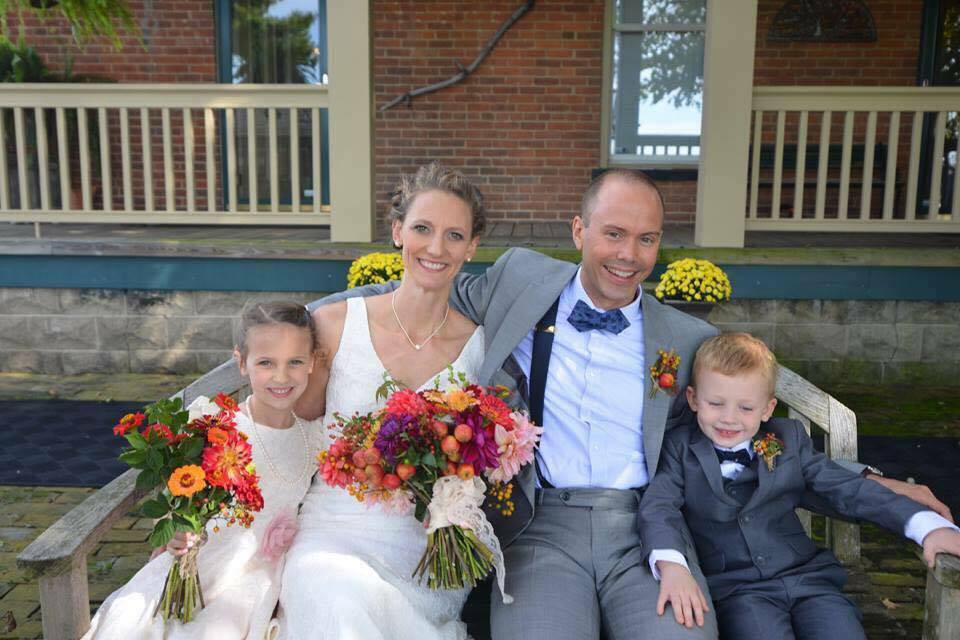
Adah, Eileen, Brent, Eamon
The Good News of the 1st Law: Breakthrough and Community
This comes from an experience living in community last year during a year of service out in California.
- Breakthrough may or may not occur. It is unpredictable. How it happens is mysterious. All we can do is work toward breakthrough.
We didn’t quite know what we were doing, nor did we continuously make efforts to actively engage one another. Community is funny that way--we could co-habit a space, share meals, tells stories, show emotion, but still not understand what the other was saying. What we did well, maybe one of the only things we did well, was continuously show up for one another. When work was draining, we were annoyed at the poor job someone did at their chores, or interpersonal differences colored our conversations, we still managed to show up whether we were open to receive or not. The act of presence mattered.
My position midway through the year was one of defeat. How could we possibly be an open, loving, nurturing community if we were so different? If we were on so many opposite sides of different spectrums and belief systems and ways of living our lives? It didn’t seem possible, it still doesn’t seem--months removed--like it actually happened. But there were pockets of light and true consensus and mutual growth.
I believe that it was through our shared contemplation and experience of the divine that led us to a place of peace. A ceasefire, a new hope for our co-creation of this entity we called community. Through our weeks spent on the road climbing up snow-covered mountains, hiking up heaven’s stairs through the mist, watching the sun rise and set over some of nature’s greatest majesty, or driving on the edge of a cliff screaming ourselves voiceless to crappy early 2000s pop-rock music, we came together through a shared experience of the glory of this world. Through a deeper experience with the great mystery, we mysteriously were able to meet each other in a place of mutual awe and love for our earth, our experience, and each other.
Was it a breakthrough? It’s still unclear. Yet, we worked for it in our own unexpected and mysterious way.
Perhaps this is the good news waiting to be birthed in our torn and battered world. Through showing up for one another and mutually contemplating a sunset, we can start to understand the humanity in one another and less the stark polarizing differences. This naive approach is simple, but perhaps it’s the only place to start.

The Good News of Yoga
From a few weeks ago...my writing and posting have not yet caught up to one another but I'm slowly working to mend that! This one is inspired by Mark's gathas.
Sunlight streams through the broken window at the far corner of the room
Anxiety, lack of motivation, and laziness propel me downwards into my cocoon of sheets
But the inner fire within begs to be stoked and cultivated
I roll with blurred vision onto my mat and start the cycle of breath
Breathing in I acknowledge my lack of perfection
Breathing out I acknowledge my continual showing up for myself on the mat every morning
Muscle peels away from muscle, bones creak, signew is stretched, soreness ensues
The divine mix of effort and ease, focus and stillness, control and rootedness
“Root to rise” they say...rising and falling from the core of my being which gives me life and holds me up through every day, every experience, every conversation, every joy, every challenge
Breathing in I am grounded in love and acceptance
Breathing out I profess gratitude for the center that guides me everyday
A wind blows and my strong, rooted tree topples
Legs may not stretch as far as they did yesterday, and there is definitely tension that could be relaxed
The body begs me to give up, to cease my practice
Doubt and critique bubble up and for a few moments they are all consuming
Breathing in--it’s so hard to breathe in--I try and accept this place
Breathing out I try to tune out the inner critic
The time come when the breath quiets, stretches last longer, and serenity settles in once again
The chaos of unmet goals falls away, since it is truly not the focus of why I show up everyday
Cultivating a practice takes time, just as change--both internal and external--takes time
Have patience for that time
Breathing in I accept where I’m at today
Breathing out I smileSunday, April 9, 2017
The Good News of Opening, 4.9.2017
I asked Kine and Puck if they'd be willing to open their home on campus to host Share the Wealth with Marilyn Vazquez and they agreed; warm hospitality was also extended by tennis teammates Sarah and Bekah. They had the following response to Marilyn's time with us: "We were very grateful to gather and listen to Marilyn (Maryville student) sharing her life story as an undocumented immigrant. Her compelling story had a huge impact on us and truly opened our eyes and minds towards adversities that people like Marilyn have to deal with every day! Tennis is a very mental sport, but hearing about such powerful life stories teaches us more about mental toughness than every tennis lesson ever could!"
Saturday, April 8, 2017
The Good News of Remembering a Friend, 4.8.2017
In 45 minutes I wrote three post cards, two letters and one note to a friend on the East Coast; I’ll post one a day for the upcoming week.

Friday, April 7, 2017
The Good News of a Knock on the Front Door, 4.7.2017
We were eating dinner when there was a short knock at the door. Whose knock was it—Charlene's? Davion's? Andrew's? Joanie answered the door, and it was Chelsea Jaeger! She lives several houses up the block, and I told her just the other day I was out walking and composing a postcard in my mind to her. We had a catch up chat over the next twenty minutes. She’s been one of my teachers since we had an Honors Freshman class at SLU in 2010. Wise beyond her years, she’s now at the Brown School of Social Work. They’re lucky to have her in their midst.
Thursday, April 6, 2017
The Good News of the Barakats, 4.6.2017
Last night, Sharifa Barakat and I had dinner at Central Cafe (along with Imman Musa and Dania Saffaf Atienza). Sarah Dwidar introduced me to Sharifa her freshman year at SLU on sunny day on West Pine. Later, she took a Social Justice class with me, and we were part of SLU Solidarity with Palestine. I have long been impressed with her humor, love of literature, and keen sense of responsibility.
After dinner, we walked to Left Bank Books to hear author Ibtisam Barakat (no relation to Sharifa) share her philosophy and read from her new book, Balcony on the Moon: Coming of Age in Palestine. Someone asked her a question about the political solution to the Israeli occupation of Palestinian people, culture, and land, and she said point-blank, there’s no solution politically, there can only be a “soul-lution.” Accordingly, her contribution is to tell the story of her life as a Palestinian in Palestine and the Diaspora. She has published two books so far, and she mentioned at least three others to come, insha’allah.
I was struck by Ibtisam's clarity, calm, and compassion. Her presence is her message.
I was struck by Ibtisam's clarity, calm, and compassion. Her presence is her message.
It was an intense, gentle, and inspiring evening.

Stations of the Cross/Presence and Silence
i am in a year of service program with faith as one of the tenants. i am teaching theology. and never have i felt more unsure of what it means to talk about god. or if god is even a "who" or a "what." or if god even is.
this is scary. and sometimes sad. i think i am grieving the loss of the security i once knew in my faith.
so, when i attended a reflection on the stations of the cross, led by some other community members, i found myself becoming angry and sad. one source of these emotions was the sheer sorrow of the stories my community members were telling: jesus is stripped of his garments in the young man who refuses to go to school because he was shot at the day before. jesus falls the first time in the young woman who weeps as she discovers she is unexpectedly pregnant with no resources for this new life. jesus meets falls a second time in a man suffering from severe physical disabilities and grappling with a language barrier, trying to file for social services to assist him. jesus is nailed to the cross in ms. shirley, a wheelchair-bound woman experiencing homelessness, passed by daily by thousands in downtown chicago. the other source of this anger and sorrow was the realization that theologically, there was more i disagreed with or questioned in what my community members were saying than there was that i agreed with. i was not angry with them. i was just angry and sad. so i wrote "god," who/whatever that is, a short note of frustration, and then i let it go and focused back on what i was hearing.
then i was able to hear redeeming part of this evening of reflection. it came in the common theme that was woven throughout all the stories.
presence and accompaniment.
most of the stations deal with minute details: a small conversation, a gesture of kindness, a gift of a helping hand, small acts of persistence.
in reflecting on last night's events in connection with this week's theme, the good news of good speech, i propose the following:
-what if the good news of good speech is actually all about silence and presence?
-good words have meant nothing to me if the speaker isn't someone i first trust with silence and presence
- perhaps i am just afraid good speech will elude me when i need it most, so i feel safer offering presence and silence
- maybe the core words of good speech are, "you are not alone," and that is enough
this is scary. and sometimes sad. i think i am grieving the loss of the security i once knew in my faith.
so, when i attended a reflection on the stations of the cross, led by some other community members, i found myself becoming angry and sad. one source of these emotions was the sheer sorrow of the stories my community members were telling: jesus is stripped of his garments in the young man who refuses to go to school because he was shot at the day before. jesus falls the first time in the young woman who weeps as she discovers she is unexpectedly pregnant with no resources for this new life. jesus meets falls a second time in a man suffering from severe physical disabilities and grappling with a language barrier, trying to file for social services to assist him. jesus is nailed to the cross in ms. shirley, a wheelchair-bound woman experiencing homelessness, passed by daily by thousands in downtown chicago. the other source of this anger and sorrow was the realization that theologically, there was more i disagreed with or questioned in what my community members were saying than there was that i agreed with. i was not angry with them. i was just angry and sad. so i wrote "god," who/whatever that is, a short note of frustration, and then i let it go and focused back on what i was hearing.
then i was able to hear redeeming part of this evening of reflection. it came in the common theme that was woven throughout all the stories.
presence and accompaniment.
most of the stations deal with minute details: a small conversation, a gesture of kindness, a gift of a helping hand, small acts of persistence.
in reflecting on last night's events in connection with this week's theme, the good news of good speech, i propose the following:
-what if the good news of good speech is actually all about silence and presence?
-good words have meant nothing to me if the speaker isn't someone i first trust with silence and presence
- perhaps i am just afraid good speech will elude me when i need it most, so i feel safer offering presence and silence
- maybe the core words of good speech are, "you are not alone," and that is enough
Wednesday, April 5, 2017
Last week's theme...
I've been working on a collection of essays and poems about the year I spent working on Hamlet and playing Ophelia.
I find myself listening to this before I sit down to write or edit those pieces.
Tuesday, April 4, 2017
Songs of the Moment
From last week's theme, these are songs that I find myself putting on repeat in the last few weeks:
- The Walkmen - New Country
- Hamilton Leithauser + Rostam - In a Black Out
- Chad Valley - Shell Suite
- Spoon - WhisperI'lllistentohearit
- Spoon - Out Go the Lights
- Spoon - Can I Sit Next to You?
- Maria Taylor - Xanax
- Radiohead - Bones
- Assi El Helani - Ya Teyr
- Ya Zarif Attoul
- George Ezra - Barcelona
I find these comforting, distracting, and enthralling all at once.
The Good News of a Reader's Response, 4.4.2017
Some time back I received the succinct response from Fred Zweig after he read The Book of Mev–
“Mark, I finished reading your book yesterday. It has it all: a beautiful love story, heroic idealism, clarity. It is awesome in many respects. I am 93 years old and consider myself pretty tough-minded but it is the only book I remember reading that made me cry! Congratulations on your achievement.
With great appreciation,
Fred”
 |
| Gaza Graduation; Mary Kate MacIsaac |
The Good News of MLK, 4.4.2017
Fifty years ago today at NYC’s Riverside Church, Martin Luther King delivered a powerful, prophetic indictment of U.S. war-making in Vietnam: “They ask if our own nation wasn’t using massive doses of violence to solve its problems, to bring about the changes it wanted. Their questions hit home, and I knew that I could never again raise my voice against the violence of the oppressed in the ghettos without having first spoken clearly to the greatest purveyor of violence in the world today — my own government. For the sake of those boys, for the sake of this government, for the sake of the hundreds of thousands trembling under our violence, I cannot be silent.”
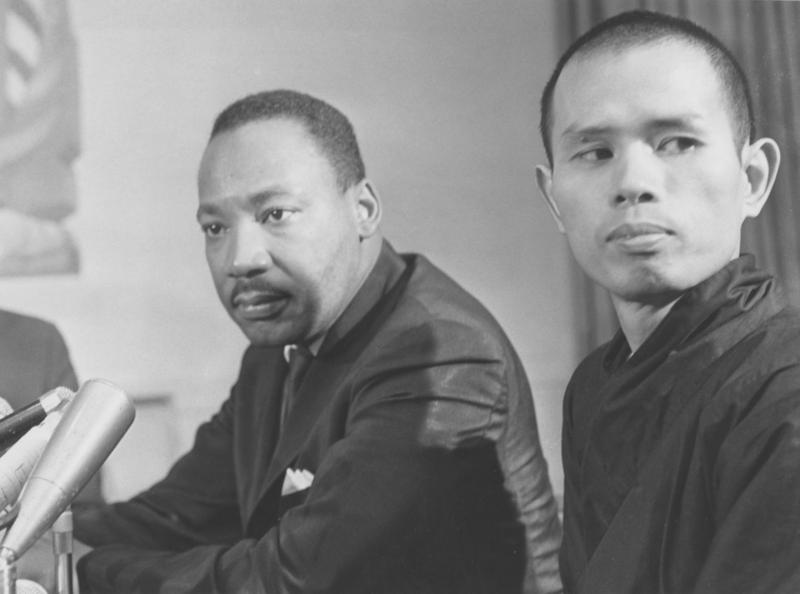
Martin Luther King and Thich Nhat Hanh
Sunday, April 2, 2017
Music that gets me through. Short list.
Dont carry it all, the decembrists
Shelter from the storm, bob dylan
Ill with want, avett brothers
Common sentiment, typhoon
Sunday bloody sunday, u2
Rockin in the free world, neil young
Coal war, joshua james
I do my fathers drugs, joe pug
Shelter from the storm, bob dylan
Ill with want, avett brothers
Common sentiment, typhoon
Sunday bloody sunday, u2
Rockin in the free world, neil young
Coal war, joshua james
I do my fathers drugs, joe pug
The Good News of Rereading, 4.2.2017
Tasha Rutledge and I had class together when she was a freshman at SLU in 2007. We read The Book of Mev in that class, and many years later she told me she reads it once a year to re-instill a sense of urgency in her life.

Subscribe to:
Posts (Atom)